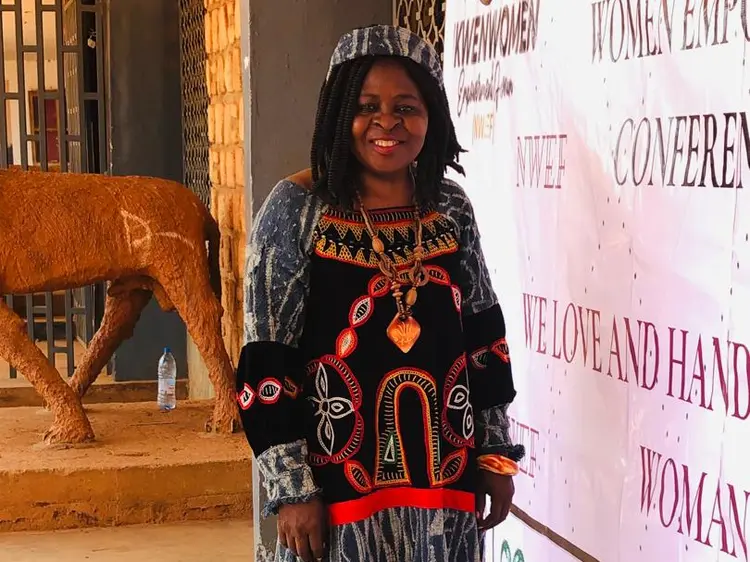
I am Ndifor Margaret Ngekwi, I live in Yaounde.
My impression about the language before this course is that knowing how to read and write your language is very necessary because it's our culture and our identity. So knowing how to read and write Nkwen has always been my wish. Therefore my participation in this course is a gradual achievement of my dream. Yes, I can now read and write the Nkwen language. We learnt the Nkwen alphabet that are 30 in number and they include the familiar and unfamiliar vowels and consonants, how to write words using the different letters of the alphabet, we learned how to form sentences in Nkwen, some proverbs or wise sayings in Nkwen, how to read and interpret some stories etc. Notwithstanding, we faced some challenges like putting the tone marks on letters and some of our assignments were not being marked due to time constraint. This made it difficult to know if what you did was correct or not. So in subsequent sessions enough time should be put in to enable a better assimilation by participants.
I got the announcement through Nkpwenbere and got connected through a link that shared. For those out there, I'm inviting them to join us in the moving train so together we should revamp our failing culture and be able to bring up our children in our culture.
To our teacher, I say thank you very much. May God continue to give you the knowledge and strength so you should continue impacting it to as many Nkwen people as possible.
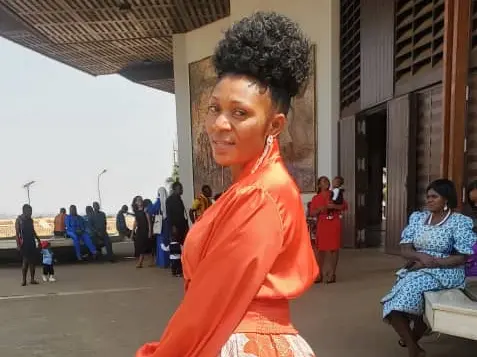
I am Linda Ngelo residing in Yaoinde.
My impression about the language is that l see it to be very important to every son and daughter of the Nkwen community who has the ability to read and write. So why not learn how to read and write your own mother tongue. I was aware of the classes at the NCDA Yaounde branch through Mrs.Tamasang Mispa.
I have learned so many things e.g the Nkwen alphabet, Familiar and unfamiliar consonants and vowels, tones, wise sayings, birds, constructing sentences, rules in writing just to name a few. My major challenge is tones. I recommend that in future, different techniques should be developed in teaching tones to make it easier to understand.
For those who do not see the need of learning how to read and write this language l will tell them that they are really missing out something. Learning this language can take you to places and open more doors for you. Thank you!
The Tongue That Closed the Door
In the bustling city of Yaoundé, Cameroon, a bright young man named Tsəʼəfò Brian had just graduated with honors in International Relations. He was sharp, well-dressed, and fluent in English and French. His dream was to serve his country on a global stage perhaps as a diplomat, or better still, in one of the prestigious embassies in Africa or abroad.
One day, an announcement came from the Ministry of Foreign Affairs: a rare internship opportunity had opened at the Cameroonian Embassy in South Africa. Hundreds applied, but only ten were shortlisted. Tsəʼəfò was among them.
On the day of the interview, he arrived early, dressed in a navy-blue suit, clutching a brown folder that held his certificates, recommendations, and identity documents. The panel of interviewers included two government officials, an elder from the National Language Council, and a woman from the Ministry of Culture.
After several formal questions about diplomacy, global politics, and international law, the panel chair leaned forward and asked,
"Young man, you’re from the North West Region, right? Can you briefly introduce yourself in your mother tongue?"
Tsəʼəfò’s heart froze.
He stammered, “Uh... I... I understand Nkwen, sir, but I - I don’t speak it very well.”
The elder smiled gently and said,
“Just greet us and tell us who you are. It doesn’t have to be perfect.”
But Tsəʼəfò (Chefor) could barely remember anything. His parents had spoken to him in Nkwen growing up, but he had always answered in English. He had thought it old-fashioned and unnecessary. At best, he could remember a few greetings, but not how to form a complete sentence.
He tried:
“A...a ndɛ... uh, Mbia... M... mba eh...”
He looked down in embarrassment. His voice cracked. The room fell silent.
The woman from the Ministry of Culture softly added,
“This internship includes cultural exchange programs. We expect you to represent Cameroon not just through English or French, but through your roots - your language, your identity.”
Tsəʼəfò nodded, ashamed.
The interview ended politely, but he already knew the outcome.
A week later, he received the email.
“We regret to inform you that you were not selected. We encourage you to continue growing in both international knowledge and national identity.”
That day, Tsəʼəfò sat by himself and wept. Not because he had failed, but because he realized how much of himself he had lost in trying to become someone else.
From that day, he began attending local language workshops in Nkwen. He joined storytelling circles, listened to elders, and practiced every day. Not because of another job, but because he never wanted to be a stranger to his own tongue again.
Moral of the Story:
Language is not just communication, it is identity, culture, and belonging. In a world that values global awareness, never forget the value of your mother tongue.
© Chefor Eugene T
@ PC Nkwen language committee
Valorize your mother tongue today!
